Australian VET content consultancy · purpose-built production system

Whatever the VET content problem,
we produce the fix.

New builds, modernisation, assessment rebuilds, LMS migration, compliance fixes. We scope your problem in an Onboarding Session, then a purpose-built 10-stage system produces the materials – learner guides, assessments, compliance mapping, branded DOCX and LMS-ready output. Your SME validates and signs off for delivery.

10-stage
Pipeline
1 unit
Per day
14+
Deliverables per unit
100%
Standards mapped

Four reasons the phone rings.

Most engagements start from one of these. Whichever it is, we start the same way – an Onboarding Session that diagnoses your actual materials, then a written plan and a fixed quote.

Outdated materials

Your training package has been updated, an audit flagged something, or the materials just haven’t kept pace with how delivery has evolved. You need a rebuild, not a patch.

New unit on scope

A unit has been added to your scope for the first time. Nothing exists. You need the full stack built from the source document up, ready for your SME to review and sign off.

Training package transition

A new training package version has been released. Every affected unit needs to be rebuilt against the new source document before your registration window closes.

ASQA audit finding

A non-conformance has been flagged and you have a remediation window. Specific units need to be rebuilt or significantly revised, and the timeline doesn’t allow for a slow internal process.

start here • every project begins with a session
Onboarding Session: $495 + GST, credited toward your work
We’re a VET content consultancy with a production system, so every project starts with understanding your problem, not picking a tier off a list. A 45–60 minute session with Joshua maps what you have (units, LMS, simorg, brand) and what you need: new builds, modernisation, an LMS migration, a compliance fix, or a combination. You get a written plan and fixed quote within 2 business days, and the $495 credits in full toward the work.
Already have a unit? Send it in first. Built internally, by an agency, or with AI. Send it when you book and we’ll run it through the production system before your session. We walk you through exactly what it finds in your own materials, live on the call, not a report in your inbox, not a hypothetical.
Book your Onboarding Session →

See Learnbuilt in action.

A short walkthrough of how a complete VET unit gets built – from analysis through to LMS-ready output.

This isn’t a cost pitch.

The numbers work. But the reason Learnbuilt exists is to give your training team back the thing that actually makes a difference.

The materials are the easy part. What your team does with the time back is the point.

01
Most RTOs don’t have a dedicated team.

Your training staff are stretched across multiple qualifications at once. The pitch isn’t “cut headcount.” It’s what does your team do with the time back?

02
A trainer with 40–100 hours back is a different trainer.

They’re coaching. Adapting to individual learners. Building the relationships that make the difference between someone who finishes and someone who doesn’t.

40–100 hrs returned per unit
03
The production argument is almost beside the point.

A typical internal designer takes 4–5 days per unit. That’s before they start on images, video, or a branded LMS. Learnbuilt produces the full text, assessments, and content images in 1–2 hours, Canvas HTML included. Add your review window and a unit moves end-to-end in 24–72 hours. But the real number is what happens after that.

1–2 hrs production · 24–72 hr turnaround

Purpose-built for Australian VET.

Other tools produce content. Learnbuilt produces everything ASQA audits – faster and cheaper than building it yourself or hiring an agency.

Other AI tools Internal team External LD agency Learnbuilt
The numbers
Per-unit cost Subscription ~$50–200/month, output incomplete $7,900–$10,400/unit all-in (salary, super, leave, tooling) ~$1,000/unit – learner guide and mapping only $950/unit – full stack included
Turnaround Hours – but what you get is incomplete 4–12 weeks per unit 2–4 weeks per unit 24–72 hours end-to-end
Your team’s role Prompt, edit, and finish it themselves They build everything You brief, manage, and chase Review and sign off
What’s included
Full learner guide Partial – text only, no AQF calibration – 4–5 days of work ✓ 8,000–15,000 words, AQF-calibrated
Assessment workbooks – additional days Sometimes – extra cost ✓ Knowledge + 1–2 project assessments
Simulated workplace documents – rarely produced ✓ Branded to your simorg
Compliance mapping matrix Manual – time-intensive ✓ Every PC, PE, KE & FS traced
QA report ✓ Mapped to ASQA 2025 standards
Canvas / LMS-ready HTML – manual upload ✓ Upload and go
Quality signals
ASQA compliance checks – none Manual – as good as the person running them Varies ✓ Codified – same rules, every unit
AQF level calibration – generic output Depends on the writer Varies ✓ Built into every stage
Video / audio evidence check – not assessed Ad hoc Varies ✓ Multi-layered check, every unit
Human moderation gate – AI output is the final output Varies ✓ Expert human review, every unit
Australian content & legislation – US-centric, wrong spelling Varies ✓ AU legislation, AU industry examples

Your L&D staff are probably already prompting AI. So are we.

The difference is what governs the output.

Without the orchestration layer (AQF level calibration, simulation classification, compliance mapping, and QA against ASQA 2025 standards), prompting produces content that reads well but may not hold up under scrutiny. Learnbuilt’s system runs the same compliance checks on every unit, every time. The same decision rules fire whether it’s your first unit or your fiftieth.

That’s not a better prompt. That’s a different system.

The maths works. But the real argument isn’t cost – it’s what your trainers do with the time back.

What’s actually inside the system.

Most AI tools give you one layer. Learnbuilt runs three.

01The Compliance Architecture Foundation

The rules that make the output trustworthy

Every unit begins with training package parsing. Elements, performance criteria, performance evidence, knowledge evidence, and assessment conditions are extracted and structured before any writing begins.

From there, AQF level calibration rules determine the cognitive demand required at each level. Simulation classification logic determines how workplace context must be established. ASQA 2025 Standards verification checks compliance mapping and assessment sufficiency before formatting proceeds.

This is the layer generic AI tools don’t have. It’s why their output reads well but doesn’t hold up when someone with VET knowledge reads it closely.

02Expert Orchestration The moat

The decisions that make the output yours

Orchestration is where the system makes judgment calls, and where eight years of working inside Australian VET is baked into the architecture.

Your simulated organisation is configured once and held consistent across every unit in your qualification. Your learner profile shapes reading level, assumed prior knowledge, and the complexity of assessment tasks. Your assessment model determines structure, submission method, and third-party arrangements.

Two RTOs delivering the same unit get materials that read differently, because the configuration is different. That’s not a feature of the generation. It’s a feature of the layer above it.

Human review at Stage 07 checks every unit against ASQA 2025 Standards before formatting begins. Nothing progresses past that gate on the strength of generation alone.

03Production Engine The output

The part everyone fixates on

Yes. AI generates the content. Learner guides, assessment workbooks, assessor guides, mapping matrices, simorg documents, QA reports, LMS-ready HTML. Fourteen deliverables per unit, built to your brand, ready to upload.

It’s fast. It’s consistent. It absorbs the production hours your team no longer has to spend.

But it’s the last layer in the system, not the first. The compliance architecture and the orchestration layer run before a single word is written. That sequence is what makes the output deployable, not just readable.

Less than 40% of this system is AI generation. The rest is compliance architecture and expert calibration. That’s why it holds up under scrutiny.

Book an Onboarding Session → See the 10-stage pipeline →

Preview on your LMS.

Every unit is built to work on any platform that accepts HTML, and delivered directly on your LMS.

// LMS previews are optimised for desktop. Open on a larger screen for the best experience.

Every unit includes all of this.

No extras. No add-on fees. The full stack, delivered in one go.

Learner Guide
8,000–15,000 words. 5+ modules. AQF-calibrated language. Australian industry contexts throughout. Your simorg and learner profile applied throughout.
Stage 04 › DOCX + HTML
Assessment Workbooks
Knowledge assessment (Assessment 1) plus 1–2 project assessments (Assessments 2–3). Instruments matched to unit type. Conditions clearly stated. All using your simorg.
Stage 06 › DOCX
Assessor Guide
Marking rubrics, model answers, reasonable adjustment notes, and assessor instructions for every assessment task. Your trainers can confidently mark without referring back to the unit descriptor.
Stage 06 › DOCX
Compliance Mapping Matrix
Every PC, PE, KE, and Foundation Skill traced to where it appears in content and how it’s assessed. The document your compliance team and auditors reach for first.
Stage 06 › DOCX
Simulated Workplace Documents
Every policy, procedure, form, register, email, or report referenced in an assessment task. Branded to your simorg, not generic templates. Created specifically for this unit’s tasks.
Stage 06 › DOCX (simorg pack)
QA Report
PASS/FAIL checklist mapped to ASQA 2025 Outcome Standards. Shows your subject-matter expert exactly what was checked and what evidence exists. The documented basis for their sign-off.
Stage 07 › DOCX
Canvas/LMS-ready HTML
Every module as a formatted HTML page, ready to paste into Canvas or your LMS. Branded headers, structured content, embedded activities. No reformatting required after upload.
Stage 09 › HTML (post sign-off)
Simorg Setup (first engagement)
Your Starter Project builds the simulated organisation from scratch: advisory firm structure, divisions, staff, and brand documents. Reused across every subsequent unit, growing as the library grows.
Included in Starter Project ($2,000)
All AI costs absorbed
No platform subscriptions or per-unit fees billed to you. The full cost of running the pipeline is included in your project price. You pay one fixed rate; we absorb the rest.
Included in all project pricing

How an engagement works.

We’re a consultancy with a production system, so we scope the work to your problem. You don’t pick a price off a slider.

  1. 1 Book an Onboarding Session $495 + GST, credited in full toward your project. A 45–60 minute session where we understand your content, learners, and scope.
  2. 2 Receive a fixed quote Based on your unit count, AQF level, and delivery requirements. No surprises, all deliverables included. Typical per-unit rates start from $950 + GST for Cert III/IV.
  3. 3 Production begins Roughly one unit per day, delivered to your Google Drive for your SME to review and sign off.
Book an Onboarding Session →

In-house benchmark: $7,900–$10,400 per unit (all-in salary, super, leave, tooling, and overhead for an L&D team producing 12 units per year, the Australian industry average). A 12-unit Cert IV at $950/unit is a fraction of that.

How to work with us.

The Onboarding Session above is where every project starts. It leads into one of these two paths. (Or grab a pre-built unit from the store, no session needed.)

self-serve • store
Pre-Built Units
Common BSB units built through the full 10-stage pipeline. Download, rebrand, and put your name on it. Your practitioners review, sign off, and start training, no production time required.
Pre-built units produced through the Learnbuilt pipeline. Ridgeline Group simorg, Learnbuilt brand. Not a custom build. You’re buying the finished output. Need materials built for your RTO, your simorg, and your LMS? That’s a project build.
from $197 per unit
  • Learner guide (8–15k words)
  • Knowledge assessment + 1–2 projects
  • Assessor guide + mapping matrix
  • Simulated workplace document pack
  • QA compliance report
Browse the store →

Add-ons (project builds)

  • · Themed qualification: +10–15%
  • · Rush (under 5 business days): +30%

Standalone services

  • · Scoped work: $350/hr + GST for LMS-only migration, compliance fix, or targeted modernisation (quoted after your Onboarding Session)

Payment: Project builds: 50% on commencement, 50% within 7 days of Stage 1–8 delivery. Store downloads: paid upfront. Scoped work: quoted after your Onboarding Session, deposit to commence. All prices exclude GST.

Answers to what RTOs actually ask.

How is this different from other course-building tools?

Learnbuilt isn’t an AI tool that happened to be applied to VET. It’s a production system built specifically for Australian RTOs, the way a line built for one job outperforms a general-purpose machine every time. Tools like eSkilled AI Creator generate learning-content pages for a global market: broad, multilingual, generic.

Learnbuilt goes into the detail those tools skip entirely, Performance Criteria, Knowledge Evidence, Performance Evidence, Foundation Skills, Assessment Conditions, a multi-layered check that determines whether video or audio evidence is warranted for each unit (and documents the reasoning), and simulated workplace document packs. None of that matters for global content platforms. For Australian RTOs delivering to ASQA, none of it can be skipped.

It also builds to your RTO’s context: your simulated organisation, your learner profile, your industry references, your assessment layout. A generic global tool can’t do that without becoming something else entirely.

We already have an internal training team, why pay you?

Most RTOs don’t have a dedicated team, and when they do, those people are usually stretched across multiple qualifications at once. The pitch here isn’t “cut headcount.” It’s “what does your team do with the time back?” A trainer who isn’t buried in content production has 40–100 extra hours per unit to spend coaching, adapting to individual learners, and building the kind of relationships that make the difference between someone who finishes and someone who doesn’t.

On pure production time: a typical internal designer takes 4–5 days to build one unit, and that’s before images, video, or a branded LMS enter the picture. Learnbuilt produces the full text, assessments, and content images in 1–2 hours, Canvas HTML included. Add your team’s review window and a unit moves end-to-end in 24–72 hours.

Internal teamExternal LD agencyLearnbuilt
Per-unit cost$7,900–$10,400/unit all-in~$1,000/unit, learner guide and mapping only$950/unit, assessor guide, simorg docs, Canvas HTML, QA report all included
Speed4–12 weeks/unit2–4 weeks/unitUp to 1 production day + your review window
Your team’s roleThey build itYou manage themThey review and sign off

The maths works. But the real argument isn’t cost, it’s what your trainers do with the time back.

What happens if the materials fail an ASQA audit?

Learnbuilt handles materials production. You handle validation and the audit relationship. Every materials package is delivered as draft, your subject-matter expert signs off before learner delivery, and your RTO holds the ASQA audit relationship. This is documented in the SOW and applies to every engagement.

If ASQA does find a non-conformance on Learnbuilt-produced materials, the typical audit outcome is a prioritised list of items to remediate within a defined window. We respond fast, most ASQA-prompted updates are scoped and fixed within 1–2 business days at standard revision rates. We’re already across the unit, so the turnaround is much faster than rebuilding from scratch.

Because materials are never published live until your SME signs off, audit findings on Learnbuilt-built units tend to be narrow and specific, not systemic. We don’t put audit-pass guarantees on the site because nobody can honestly make that claim, but we do everything that increases the probability of a clean review, and we respond fast when something needs to change.

Won’t AI-produced materials just sound the same as every other RTO using the same tool?

Only if the production environment is generic, and ours isn’t. Before we write a single line of content, we build a configuration specific to your RTO: your simulated organisation, your assessment model, your learner profile, your brand voice and terminology. Two RTOs delivering the same unit get materials that read differently because the configuration is different.

The compliance layer, Performance Criteria, Knowledge Evidence, Performance Evidence, Assessment Conditions, is the same for every RTO delivering a given unit. It has to be; it comes from the same Training Package document. That part will always look structurally similar. But ASQA doesn’t regulate how you teach, what industry contexts you use, what your simulated workplace looks like, or how your assessment tasks are framed. That’s where your RTO’s identity lives, and it’s entirely configurable.

The most visible differentiator is the simulated organisation. We build it as a professional advisory firm whose clients reflect the industries your learners actually work in. The simorg stays consistent across your entire qualification, same staff, same structure, same documents, but the client scenario changes with each unit. Learners build context over time. No two clients’ simorgs are the same, and because every assessment document is anchored to it, no two clients’ materials read the same either.

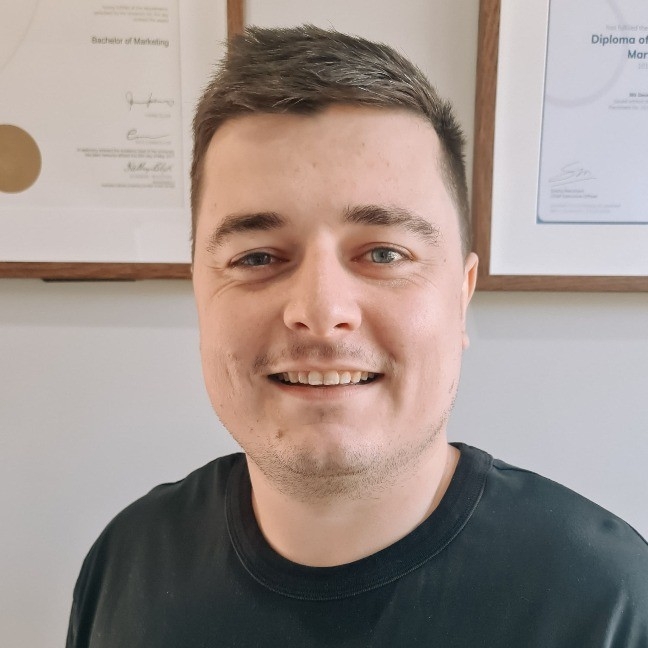
Joshua Hubbard, Founder, Learnbuilt
// Learnbuilt Founder, Joshua Hubbard
Built on real VET experience.
Founder, Learnbuilt National Training Manager, Australian RTO TAE40116 8+ Years in Vocational Education
“One unit returns 40–100 hours to your training team. Those hours go back where they belong, with learners.”

I’ve spent 8+ years inside VET, as a trainer, as an assessor, and now as National Training Manager at an Australian RTO. I know what it looks like when a trainer is fully present with a learner. And I know what gets in the way of it.

The trainers who make the real difference are the ones who are in the room, noticing who’s struggling, shifting their approach mid-session, building the kind of trust that makes a learner come back after a setback. Most of them don’t get to do that enough. They’re writing and prompting policies, mapping Performance Criteria, contextualising Word docs that weren’t built for their learners.

One unit produced by Learnbuilt returns 40–100 hours to your training team. Those hours go back where they belong: with learners.

The materials are the starting point. Your practitioners review, validate, and sign off, the compliance responsibility stays with your RTO, as it should. The production work doesn’t have to.

Book your Onboarding Session.

Tell us a little about your situation and we’ll set up your Onboarding Session ($495 + GST, credited in full toward your project).

Already have a unit (built internally, by an agency, or with AI)? Mention it here. We’ll arrange to run it through the system before your session and walk you through exactly what we find.

Something went wrong. Email joshua@learnbuilt.com.au directly.

Response within one business day. joshua@learnbuilt.com.au if you prefer email.

Enquiry received.

I’ll be in touch within one business day.